

Full Tile Demolition, Ditra Membrane, and 12×24 Floors Across Five Rooms in Terwillegar
Terwillegar Towne and the wider Terwillegar district sit in south-west Edmonton along Terwillegar Drive, with a housing stock built largely between the late 1990s and the late 2000s. By the time a Terwillegar home reaches its first big renovation cycle, the original builder-grade tile is typically on three bathroom floors, a kitchen floor, and a laundry-room floor (and on a wood-framed subfloor, those tiles have spent 15 to 20 years working against any flex in the framing). On this Terwillegar project The Tile Experts handled the full reset: complete demolition of every tiled floor in the home, a subfloor re-screw to eliminate deflection, a Schluter Ditra uncoupling membrane bonded throughout with Laticrete 253 Gold, and a 12 by 24 porcelain installed in a 70/30 staggered pattern across all five rooms.
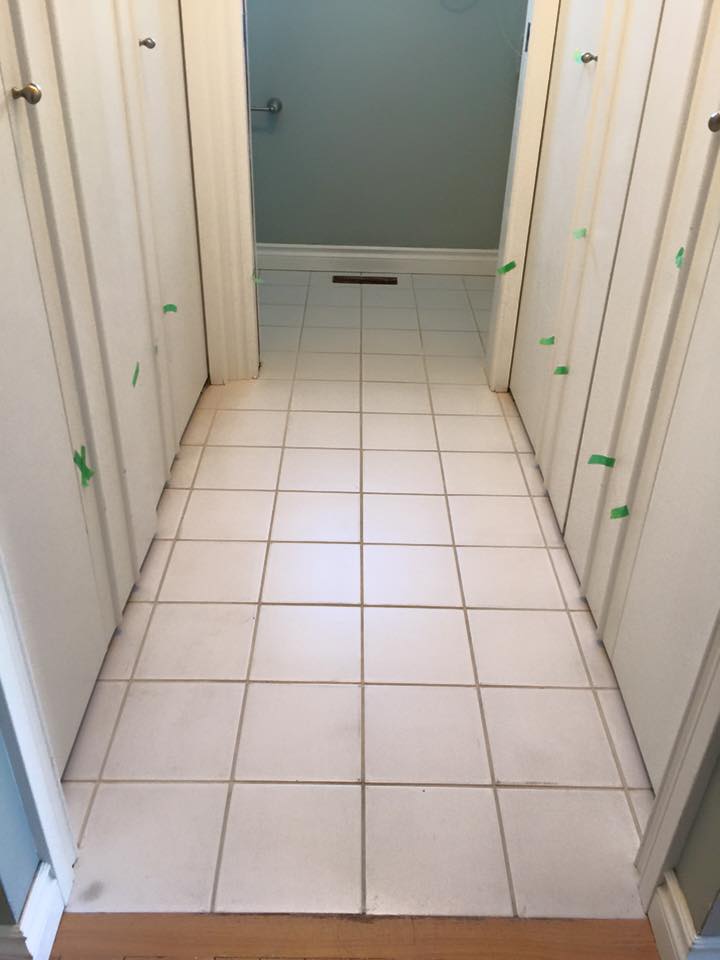
The Demolition: Three Bathrooms, a Kitchen, and a Laundry Room
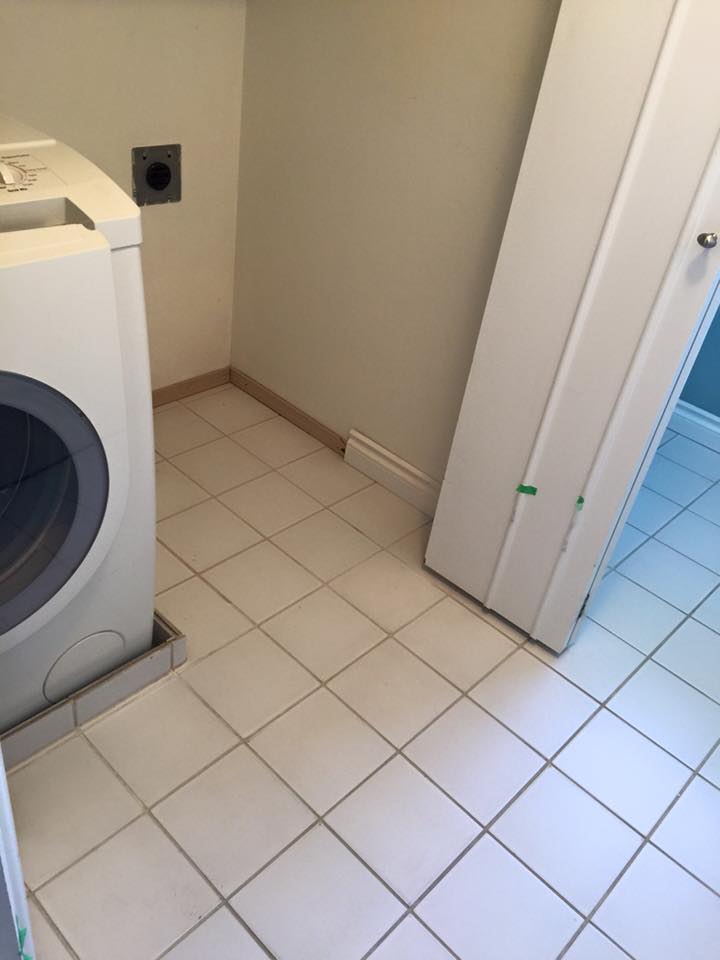
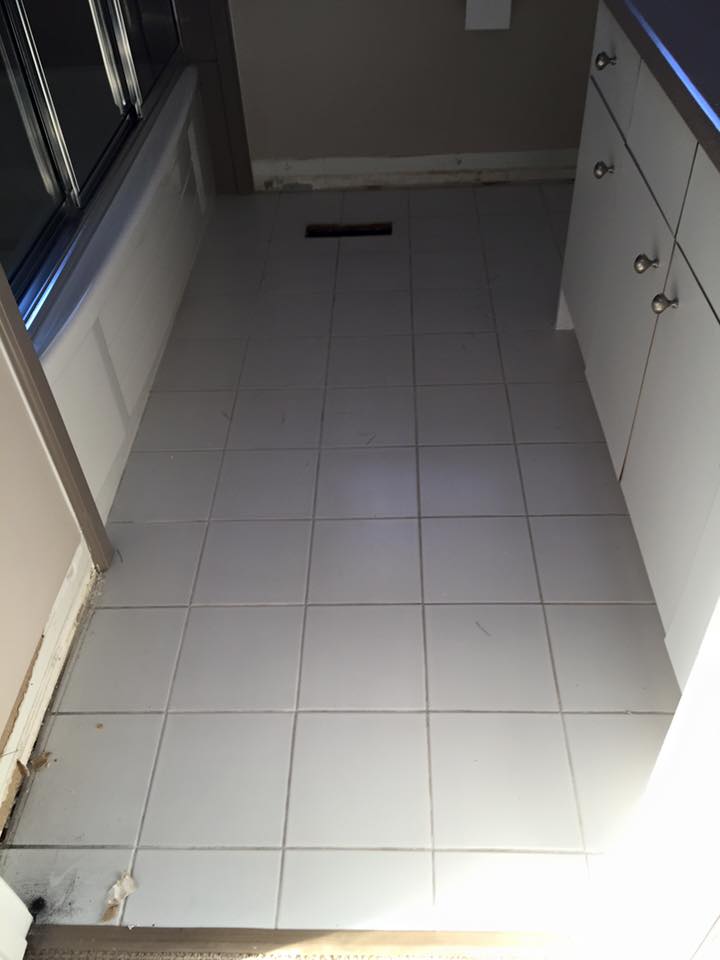
The crew was responsible for demolition of every previously tiled floor in the home. Containment: all work areas were sealed off with poly plastic from floor to ceiling to contain the dust from the demo phase, which is a non-negotiable step on an occupied house because porcelain demolition produces a volume of fine silica dust that will travel through a home if it is not contained. Method: a jackhammer lifted the tile and the underlying thinset off the plywood, and then the setter scraped any remaining thinset off the subfloor by hand to produce a smoother substrate for the new install. Result: a clean, level subfloor across every room, with the framing exposed and inspectable before the new assembly was built up. A clean demolition is the foundation of everything that comes after it; cutting the demo phase short is the most common reason a new tile floor fails inside the first decade.
The Subfloor Re-Screw: Eliminating Future Tile Pop
Once the demo was complete, the entire subfloor across all five rooms was re-screwed down into the joists. Purpose: tile pop on a bathroom or kitchen floor is almost always a substrate problem, not a tile problem. Any flex in the plywood telegraphs up through the bond coat and breaks either the grout joint or the tile itself. Method: rather than relying on the original construction-staple pattern (which loosens over decades of seasonal movement), the setter ran a fresh screw pattern through the existing plywood into every joist crossing, pulling the subfloor tight to the framing and eliminating the deflection that an aging stapled assembly carries. Result: a substrate that no longer flexes under load, which is exactly the foundation a 12 by 24 porcelain demands across a wood-framed Terwillegar home.
The Schluter Ditra Uncoupling Membrane With Laticrete 253 Gold
Across every floor the crew installed a Schluter Ditra Membrane, bonded to the subfloor with 253 Gold Laticrete Mortar. Purpose: Ditra is an uncoupling membrane, which means it mechanically isolates the tile from substrate movement. Any seasonal expansion or contraction in the wood subfloor below the membrane is absorbed by the membrane’s cavity structure rather than transmitted into the tile above. On a wood-framed Terwillegar home where the subfloor lives a full Edmonton seasonal cycle every year, the uncoupling layer is what makes the difference between a tile floor that lasts a decade and a tile floor that lasts the life of the home. Property: the molded polyethylene grid mechanically locks the bond coat from above, while the fleece backing bonds to the subfloor from below through the Laticrete 253 Gold polymer-modified thinset. Relationship: Laticrete 253 Gold is the bond coat the membrane manufacturer rates for Ditra-to-plywood bonding, which is why it was chosen here over a generic thinset.
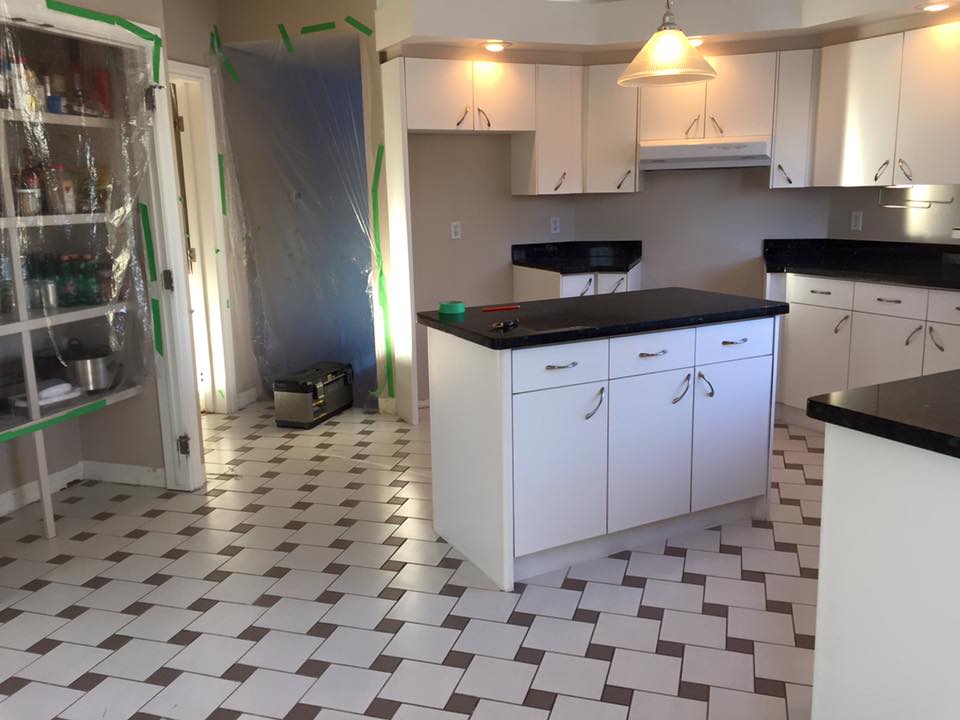
The 12×24 Porcelain in a 70/30 Staggered Pattern
Once the Ditra was set and cured, the 12 by 24 porcelain was installed across all five rooms in a 70/30 staggered pattern, set with Premium Plus Mortar and grouted with Prism Grout. Purpose: running one tile, one stagger pattern, and one grout colour across three bathrooms, the kitchen, and the laundry unifies the home as one continuous tile composition rather than as five separate floors. Property: the 70/30 stagger is the manufacturer-recommended layout for any rectified tile longer than 15 inches because it keeps adjacent tiles closer in bow profile and prevents the lippage that a 50/50 brick lay would introduce at the long-tile centre. Relationship: Premium Plus is a polymer-modified thinset rated for porcelain over Ditra, which is the bond chemistry the membrane manufacturer specifies. Prism is a high-performance, stain-resistant calcium-aluminate cement grout that holds its colour across years of foot traffic in a kitchen and a laundry room.
Why Tile Five Rooms in One Coordinated Scope
Tiling three bathrooms, a kitchen, and a laundry room as one coordinated scope (rather than as five separate projects scheduled over five years) is the move that produces a result the home reads as one design rather than as a stack of unrelated finishes. Logistics: the demolition crew, the subfloor crew, the membrane crew, and the tile crew run the entire scope as one mobilization, which keeps the total disruption to one window rather than five. Design: one tile and one grout across five rooms produces a unified composition that no piecemeal renovation can match. Substrate: if one floor’s subfloor was deflecting, all five were, so handling them in one scope means the entire wood-framed assembly gets re-screwed once rather than five separate times.
Planning a multi-room tile demolition and rebuild in Terwillegar or anywhere in south-west Edmonton? Call The Tile Experts at 587-333-9800 or request a quote.
Terwillegar Multi-Room Tile FAQ
How much does a five-room demolition and 12×24 tile install cost in Terwillegar?
For a project of this scope (full demolition of three bathroom floors, a kitchen floor, and a laundry floor, complete subfloor re-screw, Ditra uncoupling membrane across every floor, plus 12 by 24 porcelain in a 70/30 stagger), plan on 18,500 to 32,000 dollars in tile-scope labour and material, depending on tile selection and total square footage.
Why use Ditra under a porcelain floor in a Terwillegar wood-framed home?
The Edmonton seasonal cycle moves a wood-framed subfloor enough every year to crack the bond coat of a directly bonded tile install. Ditra mechanically uncouples the tile from substrate movement so any seasonal expansion is absorbed by the membrane cavity rather than transmitted into the tile. On a wood-framed home it is the difference between a floor that lasts a decade and a floor that lasts the life of the home. See our floor tile installation service.
How long does a five-room tile demolition and rebuild take in Terwillegar?
For a full demolition, subfloor re-screw, Ditra install, and 12 by 24 tile across five rooms, plan on three to five weeks of work depending on total square footage and trade sequencing.
Tile Installation in Terwillegar and South-West Edmonton
Terwillegar sits in south-west Edmonton along Terwillegar Drive, with neighbours in Magrath Heights, MacTaggart, Windermere, and Riverbend. Multi-room tile demolitions, Ditra-uncoupled floor rebuilds, and 12 by 24 porcelain installs are some of the most common projects in this 1990s and 2000s housing stock. The Tile Experts install floors, bathrooms, kitchens, custom showers, fireplaces, and feature walls across Terwillegar, Magrath, Windermere, and the rest of south-west Edmonton, plus the full capital region. Contact us or call 587-333-9800 for a free in-home walkthrough.
More Projects in Terwillegar and the Edmonton Area
Explore more recent tile installation work by The Tile Experts.