

A Recovery Bathroom Renovation in Hollick-Kenyon With a Barrier-Less Shower and Steam Spa Build
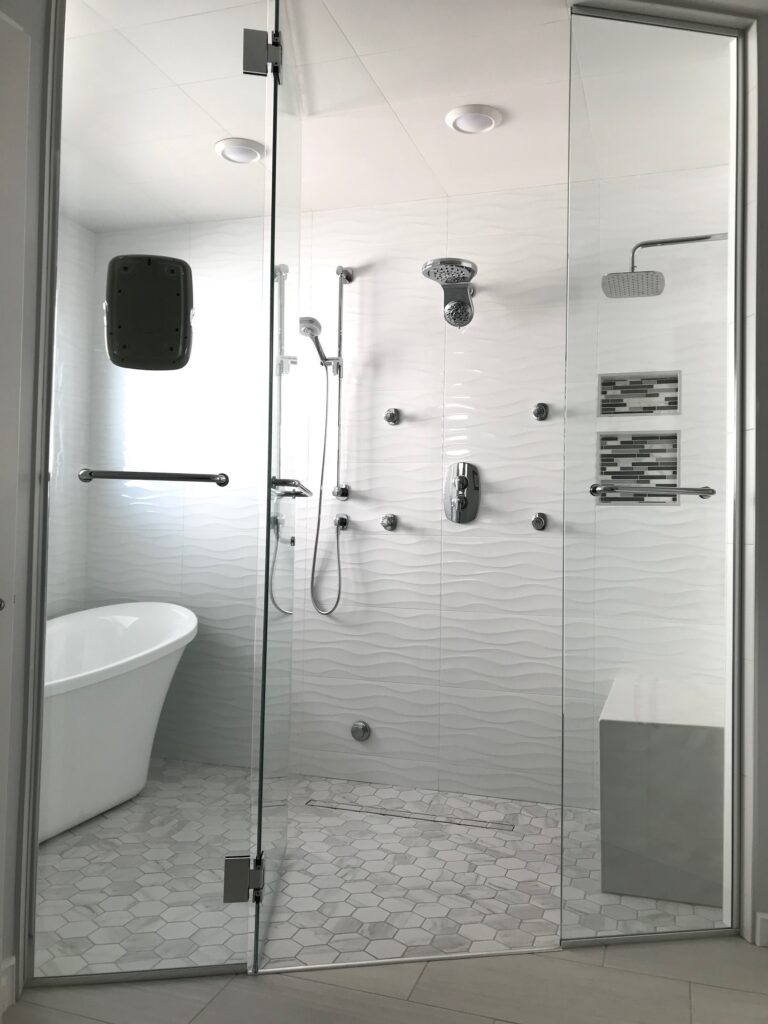
Hollick-Kenyon is a northeast Edmonton 1990s and 2000s residential community north of 153 Avenue and east of 50 Street, with a housing stock now well into its first major renovation cycle. The homeowners on this project had already started an ensuite renovation with a different contractor, who left mid-project after producing a wet-zone build with serious assembly problems. The Tile Experts came in alongside Dustin from 4 O.A.K. Construction to rebuild the homeowner’s trust along with the bathroom itself, demolishing the failed work, resetting the rough-ins, dropping the shower floor for a barrier-less entry, fully waterproofing the wet area, and tiling a full spa-grade ensuite with a freestanding tub plus a shower with a bench, rainfall head, body jets, handheld, and steam outlets, set with VersaBond Mortar and grouted with Prism Grout.
Why the Project Started With a Full Demo and Rough-In Reset
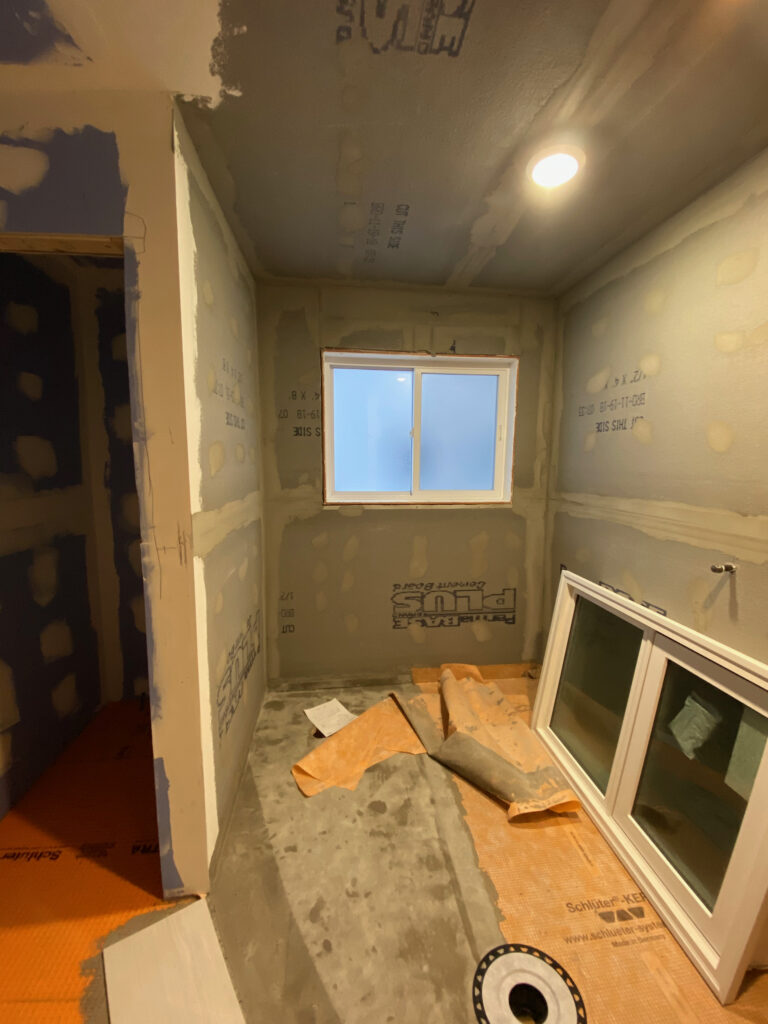
The previous contractor left the project with cabinets installed, tile already laid, a Ditra membrane in place, and a drain kit set, but with execution problems serious enough that the only forward path was a full demo back to the framing. Why a full demo rather than spot repairs: when a wet-zone install has problems with the substrate flatness, the membrane bond, the drain alignment, or the slope-to-drain, no surface-level repair can correct the underlying assembly. Tile, grout, and finish detail sit on top of an assembly stack that has to be built correctly from the substrate up, and any compromise in the lower layers propagates through every layer above. The only honest way to rebuild a failed wet-zone is to strip back to framing and start over. What we removed: the cabinets, all the laid tile, the Ditra membrane, the drain kit, and any contaminated or compromised substrate behind the failed work. Why we brought in a plumber for the rough-in check: Marvin from Beyer Plumbing was brought in to verify that the rough-in plumbing (supply lines for the rainfall head, body jets, handheld, and steam outlet, plus drain plumbing for both the freestanding tub and the shower) was correctly installed before any new substrate, membrane, or tile work went back in. Why this step is non-negotiable on a recovery project: the original contractor’s failures were on the visible finish side, but the rough-ins were installed during the same phase by the same trade, and any rough-in problems hidden behind the new work would have repeated the original failure pattern within months. Independent verification by a separate plumbing trade is the only way to close that risk. The result of the reset: a clean substrate, verified rough-ins, and an empty wet-zone ready for a properly built assembly.
Why the Shower Floor Was Dropped for a Barrier-Less Entry
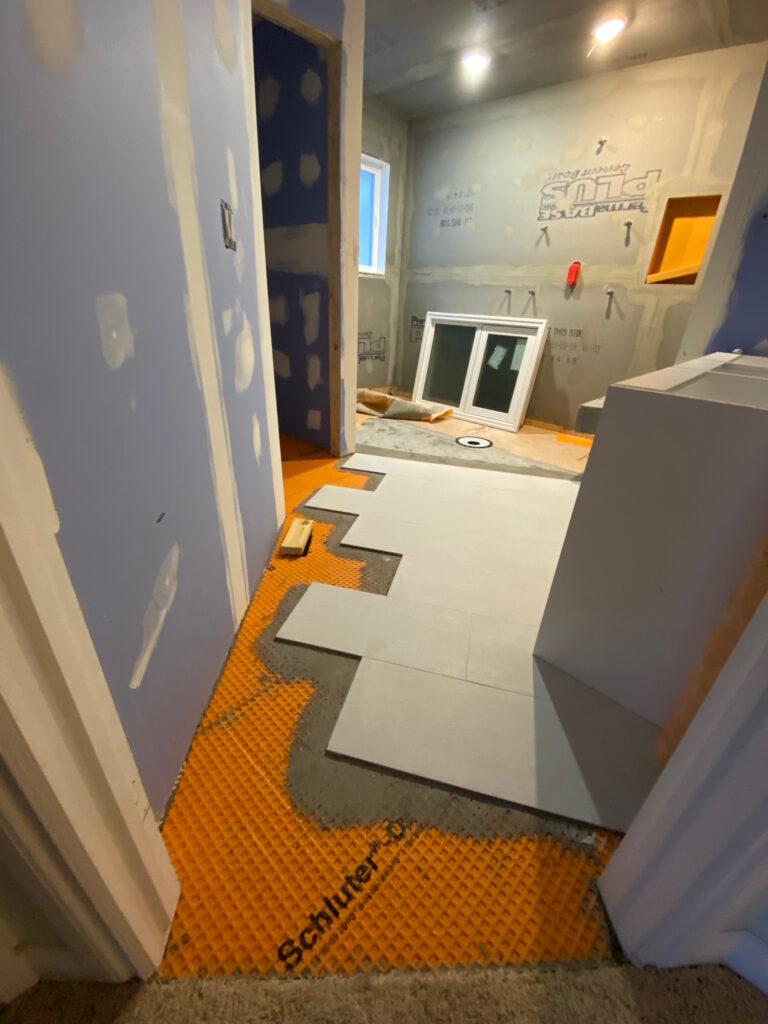
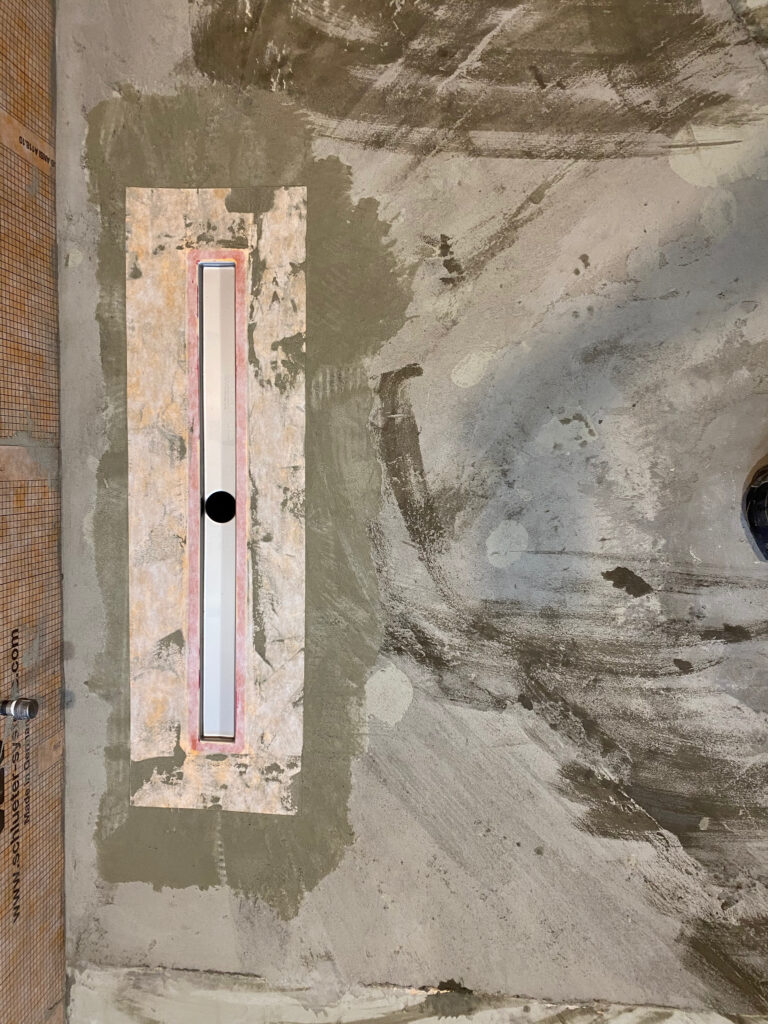
One of the spec changes during the rebuild was dropping the shower floor level so the homeowner could have a barrier-less shower entry. What a barrier-less shower entry is: a shower designed without a raised curb at the threshold, so the bathroom floor and the shower floor sit at compatible elevations and the shower entry has no step-over. The shower floor is sloped to drain inside the shower envelope, with a linear drain or hidden trench drain doing the water capture, and the threshold between bathroom floor and shower floor is either flush or a small recessed channel. Why dropping the shower floor was necessary: the bathroom floor was already finished at a fixed elevation by the surrounding house construction, and to achieve a barrier-less entry the shower floor had to drop low enough below the bathroom floor that the slope-to-drain inside the shower could be built up without bringing the shower floor back up to the bathroom floor level. The drop creates the elevation budget for the slope. Why a barrier-less shower in a renovation: barrier-less showers deliver aging-in-place accessibility (no step-over to lift over with mobility limitations, walker access, or wheelchair access if needed later), plus the contemporary design reading of a continuous floor plane between bathroom and shower. On a renovation that is rebuilding the bathroom from scratch anyway, adding the barrier-less spec extends the ownership horizon of the build by 20 to 30 years past what a conventional curbed shower would have delivered. The structural work: dropping the shower floor required cutting back the floor sheathing inside the shower footprint, framing for the lowered shower pan, and rebuilding the floor system underneath with the elevation step-down. This is the kind of structural change that has to happen before any membrane or tile work, and it is the moment in the project where collaboration with 4 O.A.K. Construction was essential.
Building Back Up: Wonder Board, Waterproofing, and a Full Steam Shower
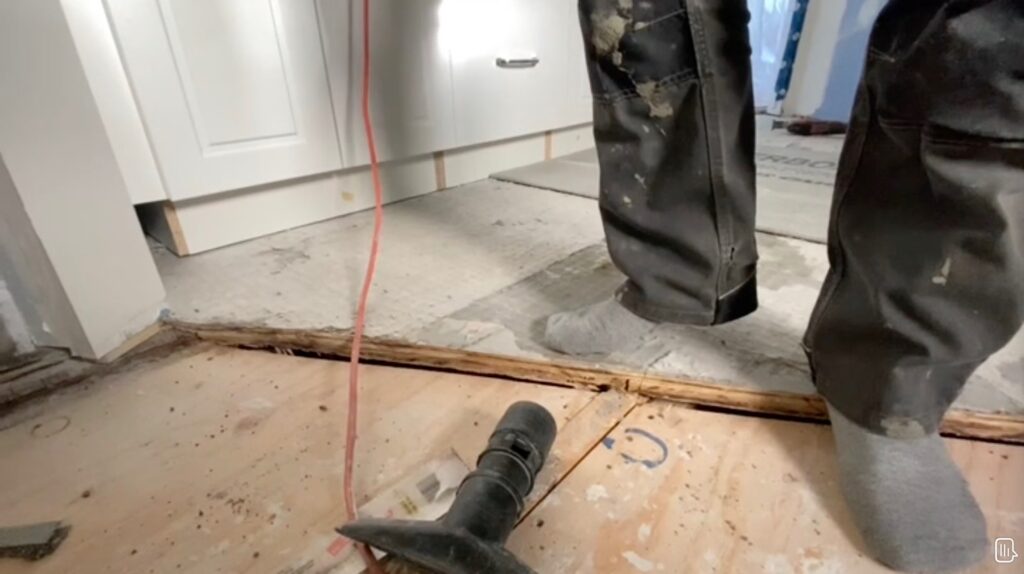
With the shower floor dropped and rough-ins verified, the assembly came back together from the substrate up. Wonder board on the bathroom floor: we built the bathroom floor up with wonder board (a cement-based backer board) to set the starting height of the shower slope. The build-up creates a consistent substrate elevation across the bathroom floor that the slope-to-drain inside the shower can be referenced against, so the shower floor finishes at the right elevation relative to the bathroom floor at the threshold. Waterproofing the entire wet area: the wet area (which includes the shower envelope, the floor under and around the freestanding tub, and the immediately surrounding bathroom floor) was waterproofed as a continuous zone rather than as a shower-only waterproofing. Freestanding tubs splash water onto the floor around the tub during use, and a waterproofing assembly that stops at the shower curb leaves the surrounding floor and walls exposed to that spray. Extending the waterproofing across the full wet zone closes that exposure. The shower fixture spec: the shower includes a built-in bench, a rainfall shower head, body jets, a handheld, and a steam outlet. Each fixture has its own rough-in penetration through the substrate and the waterproofing assembly, and each penetration is a potential leak point if not properly flashed. The waterproofing assembly was detailed around every penetration so the wet-zone envelope stays continuous. The tile work: we tiled the bathroom floor and the shower floor and back wall, set with VersaBond and grouted with Prism. The shower bench, the surrounding walls, and the threshold detail were all built into the tile work to deliver a spa-grade finish that delivers on the rebuild commitment the homeowner was originally promised.
Recovering from a failed contractor or planning a barrier-less spa-grade bathroom renovation in Hollick-Kenyon or anywhere in northeast Edmonton? Call The Tile Experts at 587-333-9800 or request a quote.
Hollick-Kenyon Recovery Renovation FAQ
How much does a recovery bathroom renovation with full demo, plumbing verification, a barrier-less shower, full wet-area waterproofing, and a freestanding-tub plus steam-shower build cost in Hollick-Kenyon?
For a project of this scope (full demo back to framing, rough-in verification by an independent plumber, structural floor work to drop the shower for a barrier-less entry, wonder board build-up, full wet-area waterproofing, fixture rough-ins for rainfall head, body jets, handheld and steam outlet, full tile install on bathroom floor, shower floor, and back wall with VersaBond and Prism), plan on 18,500 to 32,000 dollars in tile-scope and assembly labour and material, with the recovery-demo scope and the wet-area square footage as the primary cost drivers.
Why does a recovery project have to demo back to framing rather than save the visible tile work?
Tile and grout sit on top of an assembly stack (substrate, membrane, bond coat) that has to be built correctly from the bottom up, and any compromise in the lower layers propagates through every layer above. Saving the visible work means inheriting the underlying problems, which is what produced the original failure.
Why bring a separate plumber in to verify the rough-ins on a contractor recovery?
The rough-ins were installed by the same trade during the same phase as the failed finish work. Any hidden rough-in problems would repeat the original failure pattern within months. Independent verification by a separate plumbing trade closes that risk. See our tile demolition and preparation service.
Tile Installation in Hollick-Kenyon and Northeast Edmonton
Hollick-Kenyon sits north of 153 Avenue and east of 50 Street, with neighbours in Belmont, Hairsine, Casselman, Kirkness, Clareview Town Centre, and the broader northeast 1990s and 2000s residential market. Bathroom renovations, contractor-recovery rebuilds, barrier-less shower conversions, and full wet-area waterproofing builds are some of the most common projects in this established northeast neighbourhood now in its first major renovation cycle. The Tile Experts install bathrooms, kitchens, floors, custom showers, fireplaces, and feature walls across Hollick-Kenyon, Belmont, Hairsine, Casselman, Kirkness, Clareview, and the rest of northeast Edmonton, plus the full capital region. Contact us or call 587-333-9800 for a free in-home walkthrough.
More Projects in Hollick Kenyon and the Edmonton Area
Explore more recent tile installation work by The Tile Experts.