

A 12×24 Glossy Stacked Backsplash and a Mosaic-Feature Basement Bath in Hairsine
Hairsine is a northeast Edmonton neighbourhood sitting north of 144 Avenue and east of Manning Drive, with a housing stock that arrived in the late 1970s and 1980s and is now well into its second renovation cycle. Whole-house refresh projects in this stock typically pair a kitchen update with a basement bathroom build-out, and the tile scope spans both rooms as one coordinated contract. On this Hairsine renovation The Tile Experts handled exactly that scope: a 12 by 24 glossy kitchen backsplash set in a stacked pattern with VersaBond, plus a basement bathroom with a mosaic accent wall and vanity splash set in ReliaBond and a 3 by 6 subway tub surround set in a 50/50 brick lay with VersaBond.
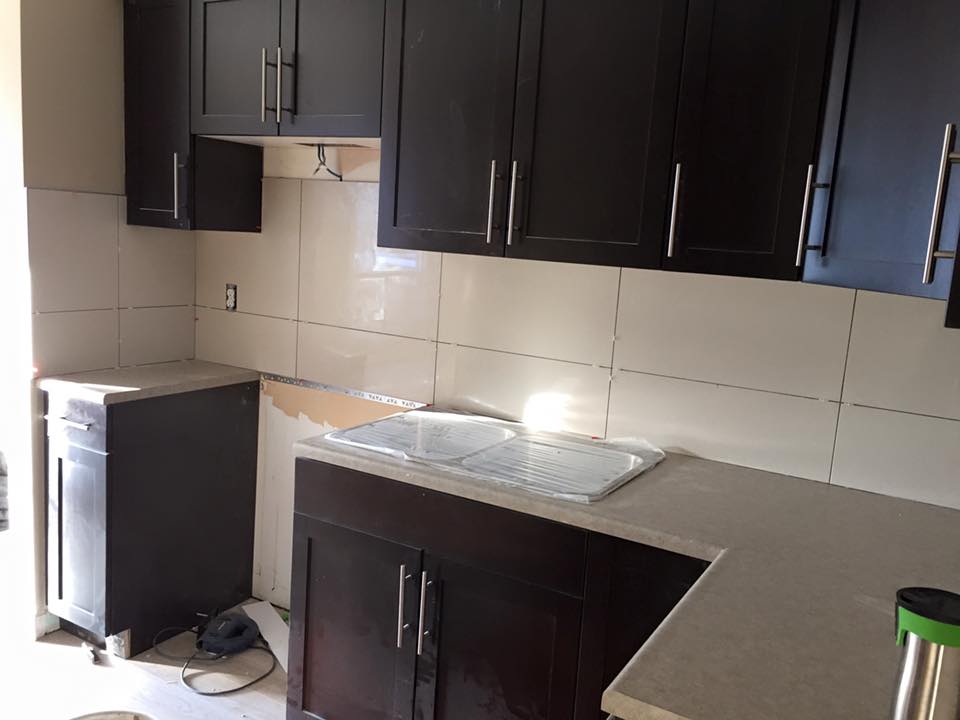
The 12×24 Glossy Backsplash in a Stacked Pattern
The kitchen backsplash on this Hairsine renovation broke from the conventional subway-tile vocabulary entirely. The format: a 12 by 24 glossy porcelain, installed in a stacked pattern (every joint aligned vertically with the joint above and below it) rather than the brick lay that defines a subway field. Why the 12 by 24 stacked layout is the contemporary kitchen move: a stacked large-format tile reads as architectural, modern, and unmistakably current. The grid is precise, the joints align cleanly in both directions, and the high gloss face throws light around the kitchen in a way no matte tile can. Why this format demands install precision: a stacked layout has nowhere to hide. Every joint has to align vertically across every course, the tile faces have to land lippage-free against each other, and any deviation from the grid reads as a layout defect. On a brick lay or stagger the eye averages out small variations; on a stacked grid there is no averaging. The bond coat: the field was set with VersaBond Mortar, the polymer-modified portland-cement thinset that the application demands. A 12 by 24 glossy backsplash is a heavy vertical tile that needs the bond strength and the open time that VersaBond delivers, and the polymer modification provides the flexibility the substrate cycling demands.
Why a Glossy Face Changes the Install Standard
A glossy tile face is not the same install scope as a matte tile face, and the setter has to adjust the install approach accordingly. Why glossy is harder: the polished face shows every lippage variation as a light reflection misalignment. Two adjacent tiles that are a sixteenth of an inch out of plane will reflect light at slightly different angles, and the eye catches that misalignment immediately even when the actual height difference is invisible to touch. The lippage tolerance on a glossy stacked 12 by 24: measurably tighter than on a matte tile of the same size. The setter has to back-butter when needed, adjust bond coat thickness tile by tile, and check every course for plane with a straightedge before the bond coat sets. What this means for the install rate: a stacked glossy 12 by 24 install is meaningfully slower per square foot than a brick-lay matte 12 by 12, and the labour cost reflects that. A setter quoting glossy stacked work at matte brick-lay rates is going to either lose money on the job or cut corners on the lippage discipline.
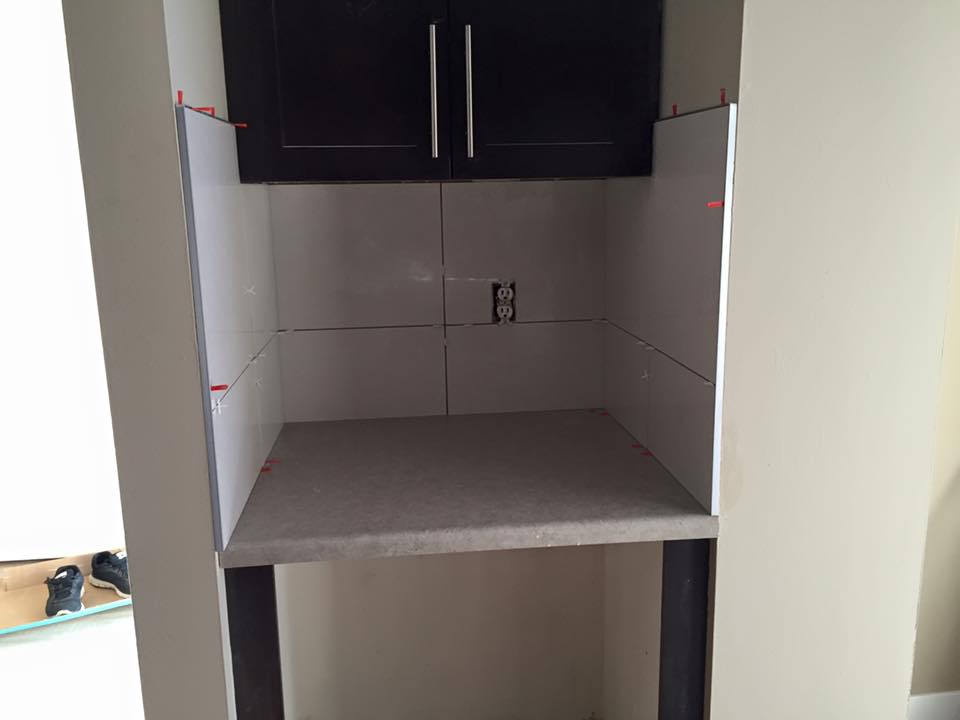
The Basement Bathroom: Mosaic Accent and 3×6 Tub Surround
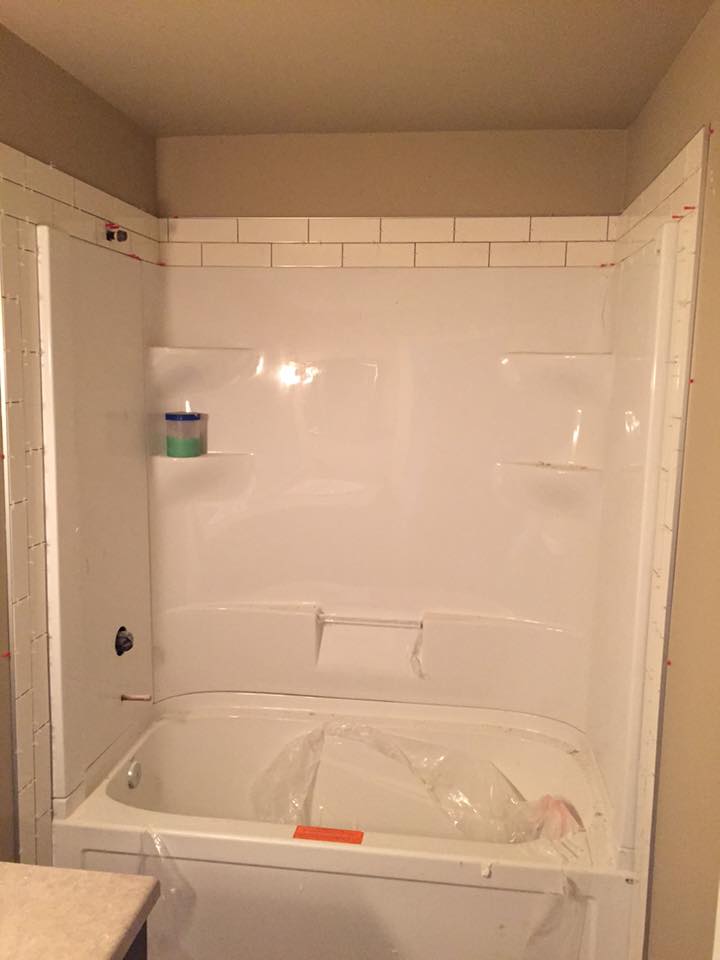
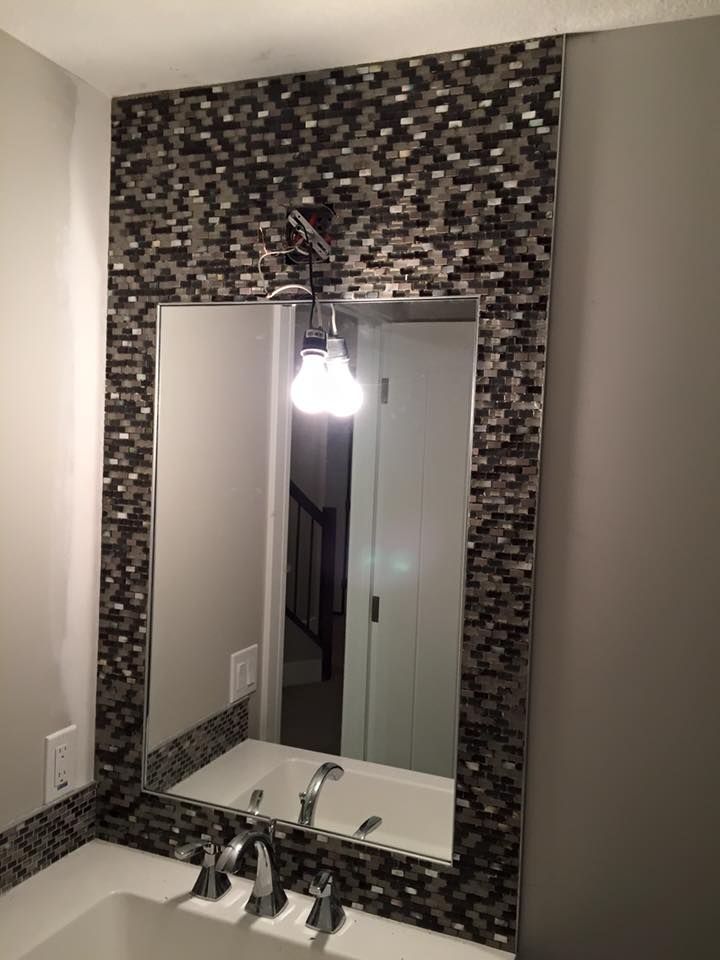
The basement bathroom on this Hairsine renovation pairs a mosaic accent treatment with a classic 3 by 6 subway tub surround. The mosaic accent wall and vanity splash: a mosaic feature was installed on a defined accent zone (a wall section behind the vanity and extending up to define the splash zone), set with ReliaBond Tile Adhesive. Why ReliaBond for mosaic in a non-wet zone: ReliaBond is a Type 1 organic mastic that gives the setter the grab strength and the open time a mosaic install needs. Mosaics are slower to set than field tile because every sheet has to be aligned with the sheets adjacent to it, and ReliaBond’s working window supports that pace. Why mosaic as the accent move: a mosaic accent wall in a basement bathroom is the single most cost-effective way to add design character to a small room. The mosaic square footage is small (one accent wall plus the splash zone), but the visual impact carries the whole room. The tub surround: a 3 by 6 ceramic subway in a 50/50 brick lay, set with VersaBond Mortar. Why the chemistry switch from ReliaBond to VersaBond: the tub surround is a continuous wet-zone application that demands the polymer-modified portland chemistry of VersaBond, not the organic mastic of ReliaBond.
Why a Mosaic Accent Plus a Subway Tub Surround Is the Right Basement Bath Formula
The pairing of a mosaic accent zone with a classic subway tub surround is one of the most reliable basement-bathroom design moves in residential tile work. Why it works: the mosaic carries the design statement (this is a custom-designed room, not a builder-grade afterthought), while the subway carries the timelessness (this is a tub surround that will age well across decades). The two together give the room a deliberate composition with one focal design moment and one supporting workhorse field. Why the formula scales across budgets: the mosaic can range from a budget glass-and-stone blend to an upper-tier marble-and-metal, and the subway field stays at a stable price point regardless. The homeowner controls the design upgrade entirely through the mosaic selection. Why this is the right approach for a renovation cycle in 1980s housing stock: a Hairsine basement bathroom typically gets renovated as part of a whole-house refresh that is targeting tenant rental, family secondary use, or eventual resale. The mosaic-plus-subway formula carries enough design character to support all three use cases without locking the room to a trend that will date within the decade.
Planning a kitchen plus basement bathroom renovation in Hairsine or anywhere in northeast Edmonton? Call The Tile Experts at 587-333-9800 or request a quote.
Hairsine Renovation FAQ
How much does a 12×24 glossy stacked backsplash plus a mosaic basement bathroom cost in Hairsine?
For a project of this scope (12 by 24 glossy kitchen backsplash in a stacked pattern with VersaBond, basement bathroom with mosaic accent wall and vanity splash set in ReliaBond plus 3 by 6 subway tub surround in 50/50 brick lay with VersaBond), plan on 5,800 to 11,500 dollars in tile-scope labour and material, depending on mosaic selection and total square footage.
Why is a stacked 12×24 layout harder to install than a brick lay?
A stacked layout requires every joint to align vertically across every course. Any deviation from the grid reads as a layout defect because there is no offset rhythm to absorb small variations. The setter has to lay out the field with precise joint alignment and check every course for plane.
Why is a glossy tile harder to install than a matte tile?
The polished face shows every lippage variation as a light reflection misalignment. Two adjacent glossy tiles that are slightly out of plane will reflect light at different angles, and the eye catches that misalignment immediately. Glossy installs require tighter lippage tolerance and more back-buttering than matte installs. See our kitchen backsplash service.
Tile Installation in Hairsine and Northeast Edmonton
Hairsine sits north of 144 Avenue and east of Manning Drive, with neighbours in Kirkness, Kernohan, Belmont, Clareview Town Centre, and the broader Clareview ward. Whole-house refresh tile packages, contemporary 12 by 24 stacked backsplashes, basement-bathroom mosaic features, and 3 by 6 subway tub surrounds are some of the most common projects in this 1970s and 1980s housing stock that is now mid-renovation-cycle. The Tile Experts install bathrooms, kitchens, floors, custom showers, fireplaces, and feature walls across Hairsine, Kirkness, Kernohan, Belmont, Clareview Town Centre, and the rest of northeast Edmonton, plus the full capital region. Contact us or call 587-333-9800 for a free in-home walkthrough.
More Projects in Hairsine and the Edmonton Area
Explore more recent tile installation work by The Tile Experts.