

Travertine Backsplash With Horizontal Inserts in Hairsine, Edmonton
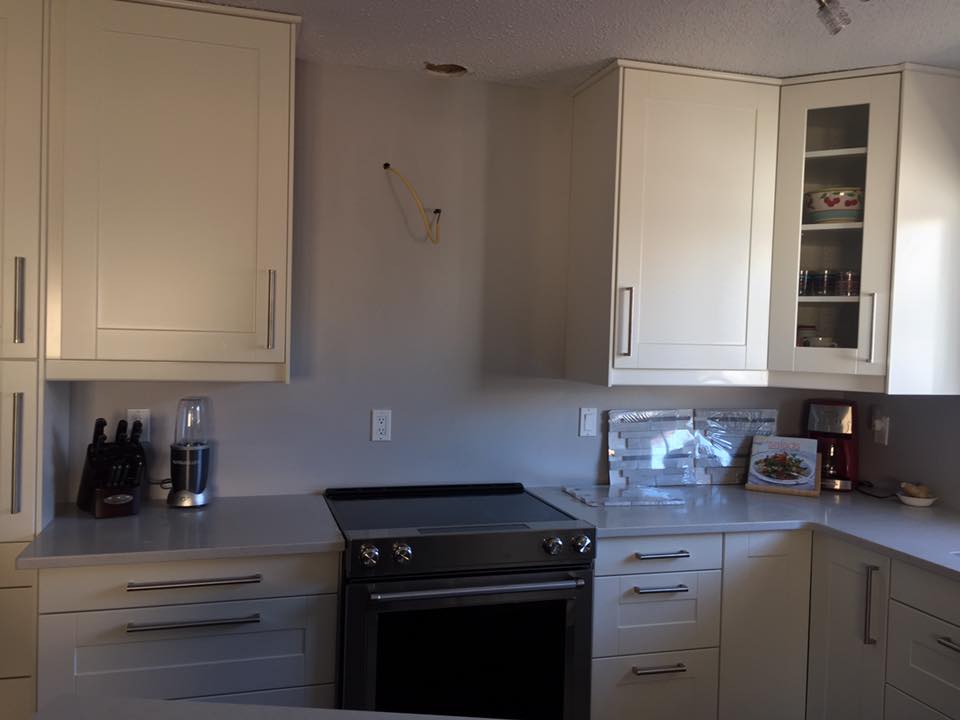
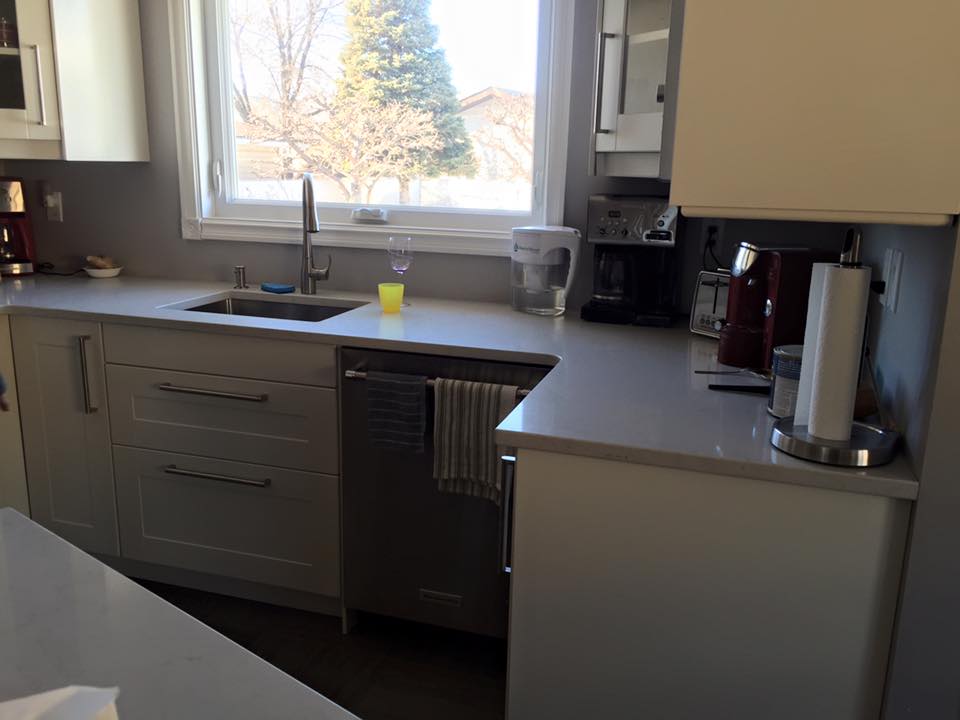
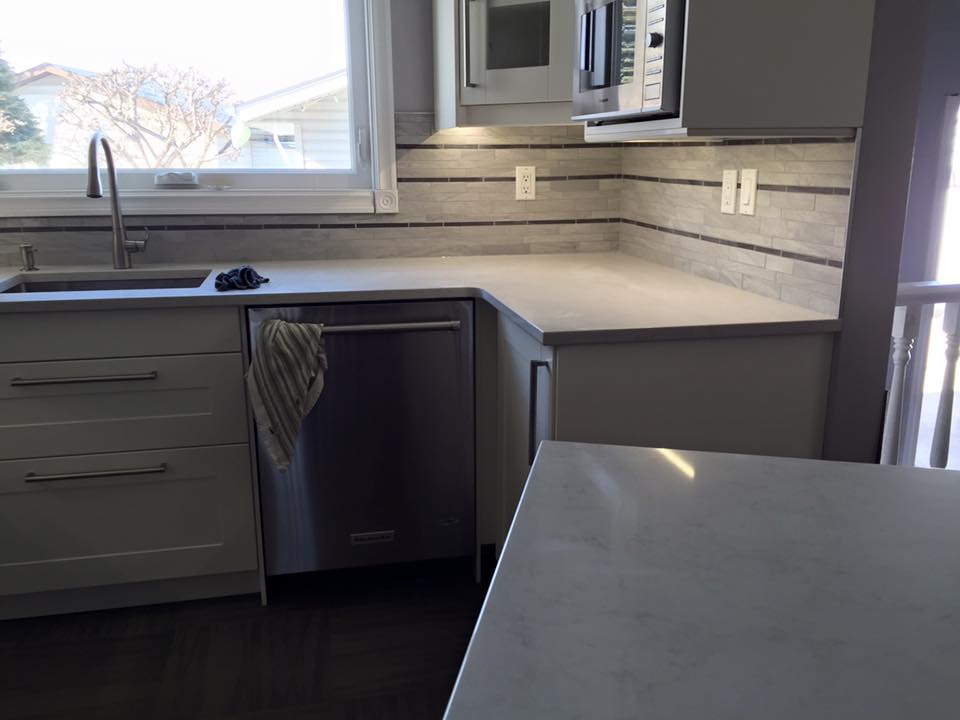
This Hairsine kitchen backsplash project leaned into natural stone rather than the more common ceramic or glass options. The Tile Experts installed a mixed-size travertine field tile interrupted by multiple one-inch horizontal accent inserts running across the wall at three pre-planned elevations. The result is a warm, layered backsplash with a strong horizontal rhythm that suits the long galley layout of a 1970s northeast Edmonton kitchen. Travertine is a different animal than ceramic, and the install reflects that.
Why Travertine Behaves Differently Than Ceramic or Porcelain
Travertine is a sedimentary limestone that forms around mineral springs, so it arrives at the job site with natural voids, fissures, and a soft body that absorbs water at a much higher rate than fired ceramic. That has three implications for the install. It needs sealing. A travertine backsplash should be sealed before grouting and re-sealed after, so the grout does not migrate into the stone’s open pores and leave a permanent shadow at every joint. It is variable. No two tiles are identical, which is the design appeal, but the installer has to lay out the box dry on a workbench and pre-select which faces go where so similar-toned tiles do not cluster on one side of the wall. It is softer. Travertine cuts smooth on a wet saw at a slower feed rate, and the cut edge usually needs a light hand-honed pass to remove the bur left by the diamond blade.
Layout: The Three Horizontal Insert Lines That Anchor the Wall
The design called for three horizontal stripes of one-inch travertine inserts running the full width of the backsplash. Insert lines on a stone wall have to be measured against the cabinet line, the counter, and the window header, not against the floor or the ceiling, because the cabinets are what your eye actually references in a kitchen. We snapped three laser lines off the underside of the upper cabinets, dropped each insert row to its planned elevation, and held the rest of the field tile to those lines. Any drift in the laser snaps shows up immediately as a wandering stripe across the wall, so we re-checked the lines after every two rows. Layout discipline of this kind is the difference between a backsplash that reads designed and one that reads improvised. See our kitchen backsplash service page for more on this style of work.
Setting Travertine on a Vertical: ReliaBond and a White-Bodied Substrate
The field tile and the one-inch inserts were both set with ReliaBond Tile Adhesive. Purpose: ReliaBond is a Type 1 organic mastic, pre-mixed, with the grab strength needed to hold travertine vertically without sag while the bond develops. Property: mastic is the correct setting material for a dry interior wall over standard drywall or skim-coated cement board. A thinset would over-engineer the assembly and add cure time without any performance gain on a backsplash. Relationship: the white body of the adhesive is invisible behind the relatively opaque travertine, but more importantly, the consistent film thickness keeps every tile in the same plane across a wall where the tiles themselves vary in thickness by a millimetre or two from the factory.
Planning a stone or travertine backsplash in Hairsine or anywhere in northeast Edmonton? Call The Tile Experts at 587-333-9800 or request a quote.
Sealing and Grouting: The Two-Pass Method for a Stain-Free Stone Wall
Before any grout touched the wall, the travertine was sealed with a penetrating impregnator sealer. The sealer fills the open pores in the stone face and the cut edges so the grout slurry rides on top of the surface during application rather than soaking in. We then grouted with a high-performance, stain-resistant Prism Grout matched to the dominant travertine tone. The grout went on with a soft rubber float, the haze was cleaned with a damp sponge rinsed often, and the wall was re-sealed 48 hours after grout cure to lock the assembly. That two-pass seal-grout-seal sequence is what keeps a travertine backsplash looking new five and ten years out instead of dirty and dingy by year two.

Hairsine Travertine Backsplash FAQ
How much does a travertine backsplash cost in Hairsine?
For a standard kitchen with 30 to 40 square feet of mixed-size travertine plus an accent insert line, plan on 2,200 to 4,000 dollars in labour and material, depending on the source of the stone and the complexity of the layout.
How often does travertine need to be re-sealed?
A kitchen backsplash sees light wear, so a properly sealed travertine wall typically holds up for five to seven years before it benefits from a refresh coat of penetrating sealer. High-splash zones around the cooktop and sink may want a touch-up sooner.
Will travertine stain from olive oil or red wine splashes?
Sealed travertine is highly stain resistant for everyday kitchen incidents. Wipe spills within a few minutes of contact and the sealer prevents migration into the stone. A pH-neutral stone cleaner is the right cleaner for routine maintenance.
Tile Installation in Hairsine and Northeast Edmonton
Hairsine is a mature northeast Edmonton neighbourhood north of the Yellowhead Trail and west of the Manning Freeway, built largely in the 1970s and 1980s. Many of these homes are now on their first or second kitchen renovation, often combined with a flooring or bathroom refresh. The Tile Experts install kitchen backsplashes, bathrooms, heated floors, and feature walls across Hairsine, Belmont, Kirkness, and the rest of northeast Edmonton, plus Sherwood Park, Fort Saskatchewan, and the surrounding capital region. Contact us or call 587-333-9800 for a free in-home walkthrough.
More Projects in Hairsine and the Edmonton Area
Explore more recent tile installation work by The Tile Experts.